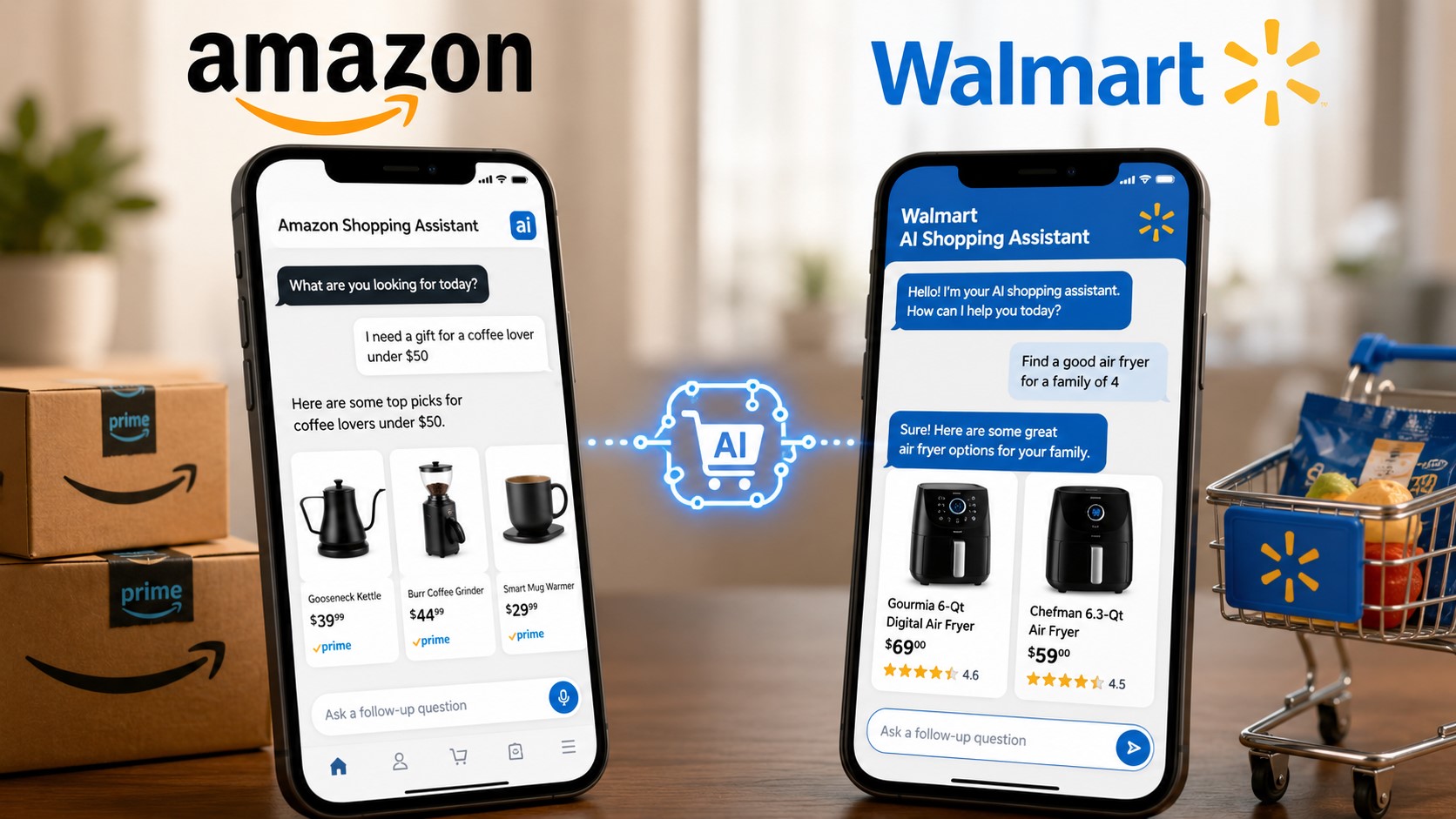
Ask Amazon and Walmart AI shopping assistants for American-made fly-fishing reels and it shrugs. “I don’t have that information.” Ask the same chatbot for reels made in China, and it delivers detailed options with enthusiasm — model names, prices, the works. Rephrase the American query slightly, and those domestic reels suddenly appear. The data was there all along.
That’s a central finding of “Made in America, Hidden by AI,” a report from Columbia Law School’s Center for Law and the Economy, authored by researchers Meyer and Harris. Their investigation tested AI shopping chatbots on Amazon and Walmart and found something worse than incompetence: selective blindness. According to the report, these systems can identify country of origin. They simply don’t prioritize it when the answer is “the United States.”
The AI Knows. It Just Won’t Tell You.
Design choices — not data gaps — reportedly determine what American-made products you ever see.
The FTC’s “Made in USA” standard requires that unqualified claims mean a product is “all or virtually all” manufactured domestically — final assembly, significant processing, negligible foreign content. Walmart has tripped over this rule before. Watchdog group Truth in Advertising found hundreds of products on Walmart.com labeled “Made in USA” despite foreign-origin packaging. An FTC probe followed. Walmart removed labels and agreed to clearer disclosures. Then in 2021, TINA.org flagged the same problems on Walmart’s curated “American-Made Products” page.
Key findings from the Columbia report and regulatory landscape:
- Amazon’s chatbot reportedly denied knowledge of American-made fly-fishing reels, then immediately delivered Chinese-made alternatives with full detail
- Rephrasing the U.S.-origin query surfaced American options — suggesting suppression was a design choice, not a data gap
- Walmart publicly pledges billions toward domestic manufacturing while watchdogs document persistent mislabeling
- FTC civil penalties for fraudulent “Made in USA” claims can reach tens of thousands of dollars per violation
- Columbia recommends congressional hearings on agentic AI accountability and a private right of action for platform-driven origin fraud
“The reality is that consumers cannot be certain that any of these products fulfill FTC’s [Made in USA] standard,” consumer advocates warned in 2021 New York Post reporting, citing Walmart’s pattern of adjusting legal criteria rather than fixing compliance.
A Familiar Cycle, With a New Engine
Origin fraud isn’t new — but AI recommendation systems give it an unprecedented reach and a plausible alibi.
This is an old problem upgraded with new infrastructure. Canadian grocers were recently fined by the CFIA for rebranding imports as domestic products. Major brands reportedly sold Chinese-grown tomatoes as Australian produce, per Bloomberg. The platform-level twist is sharper: AI recommendation systems don’t just fail to filter fraud — they may actively route around honest domestic sellers, like a GPS that mysteriously avoids locally owned shops in favor of chain drive-throughs.
Columbia’s report argues AI shopping agents should face accountability as actors making consequential trade-practice decisions, not neutral search tools. If regulators agree, design choices baked into these chatbots become enforceable violations — not user-experience footnotes. Until then, your best option for verified American-made goods remains a niche marketplace that actually checks origin claims before listing them, so you avoid paying too much for products misrepresented as domestic.